Diagnosis before removal
Tooth extractions in Murwillumbah
A sore or broken tooth needs an assessment to find out what can be done. Your dentist will examine the tooth and explain whether it can be repaired, whether an extraction is recommended and whether referral is needed. If you’re in pain or have swelling, call emergency dentistry to ask about an appointment.
144 Murwillumbah St, Murwillumbah NSW 2484. If you have pain or swelling, please call.

Why teeth are removed
When might a tooth need to be removed?
Removal may be considered for extensive decay, a damaged tooth, advanced gum disease or another clinical reason. Your dentist will examine the tooth and supporting tissues and discuss whether a treatment to retain it is appropriate.
Extensive decay
Where decay has spread too far for a filling or other repair to restore the tooth reliably.
A damaged tooth
A tooth that has cracked or broken in a way that cannot be repaired or protected.
Advanced gum disease
When the supporting bone and gum have broken down so far that the tooth is loose.
Another clinical reason
Your dentist will explain the specific finding and why removal is being considered.
Treatments that may keep the tooth
Depending on the findings, alternatives may include a filling, root canal treatment or crown. An examination helps establish whether these approaches can address the problem.
Filling
An examination helps establish whether a filling can restore the tooth.
Root canal treatment
May retain a tooth when the tissue inside it is badly inflamed or infected.
Crown
A crown can protect and rebuild a tooth with enough sound structure left.
Concerns about third molars are covered on our wisdom teeth removal page.
Your appointment
Assessment and planning
The appointment starts with an examination of the tooth and its surroundings. Everything you tell us about your health helps your dentist plan safe care.
Tell your dentist about
- Medicines you take, including blood thinners
- Allergies
- Bleeding problems
- Other medical conditions
Continue prescribed medicines unless the responsible clinician gives you specific instructions.
Imaging where needed
Imaging may be needed to assess the roots and nearby structures before planning.
Straightforward or surgical
Some teeth can be removed with a straightforward extraction. Others need a surgical approach or referral because of their position or complexity.
Explained before you decide
Your dentist will explain the proposed setting, anaesthesia, risks and recovery for your case.
Care at our practice
Who treats you, and which extractions we handle here
Tooth removal ranges from a straightforward lift of a loose tooth to a surgical case that is better handled by a specialist. Your dentist tells you which applies to you at the assessment — never on guesswork from a phone description alone.
Visible front and side teeth
Planned at the practiceUsually the most straightforward to remove and planned at the practice. An examination and X-ray confirm the plan before treatment.
Molars, broken-down or root-filled teeth
Planned at the practiceOften removable here, but they are harder to grasp and split, so the appointment and fee reflect the extra time. Your dentist confirms whether a surgical approach is needed.
Impacted or heavily broken teeth
Confirmed at assessmentThese usually need a surgical approach under local anaesthetic. Your dentist will explain whether this can be done at the practice or whether you need a referral.
Wisdom teeth
Confirmed at assessmentThird molars have their own page covering assessment, surgery and recovery, because their position varies a lot between people.
Cases needing a registered specialist
May need a referralIf your health, the tooth's position or the complexity of the procedure calls for oral surgery or specialist input, your dentist explains why and arranges a referral. You stay a patient of the practice for reviews and for any replacement tooth.
We do not promise same-day treatment. Call to check availability, and if you need help outside our opening hours, seek an available urgent dental service.
How an extraction assessment is arranged
- 1
Call or enquire
Phone us or use the enquiry form below. Tell us which tooth is troubling you and whether another dentist has recommended removal.
- 2
Describe your symptoms
Pain, swelling, bleeding or a broken tooth helps us plan the right appointment. Pain needs a phone call rather than a form.
- 3
Assessment and X-ray
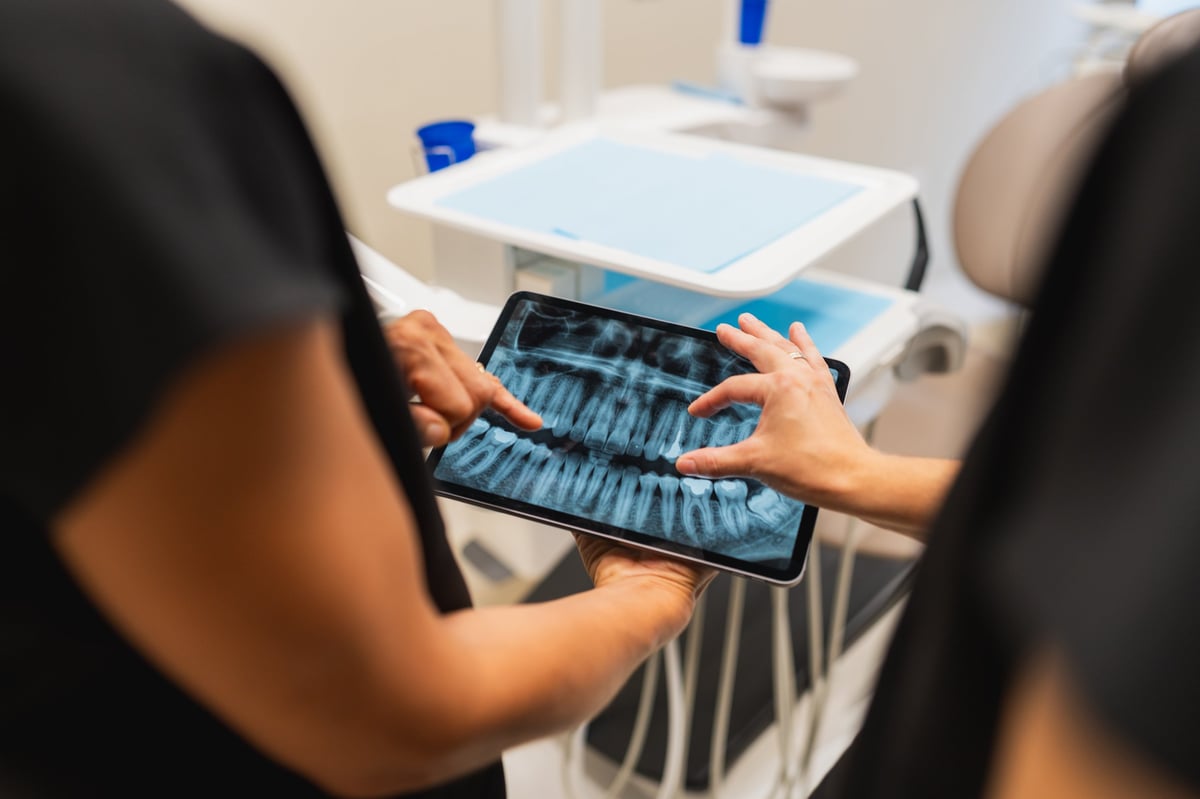
Your dentist examines the tooth, reviews your health and imaging, and confirms whether removal is appropriate or another treatment could keep it.
- 4
Written estimate, then decide
You receive an itemised estimate and an explanation of the anaesthesia, any sedation and aftercare — before anything is removed.
What to expect
What happens during tooth removal?
Local anaesthetic is commonly used to numb the area. You may feel pressure or movement during treatment; tell the clinician if you feel pain so they can assess it. The steps depend on the tooth and whether surgery is required.
Feeling anxious?
Mention dental anxiety before the appointment. You can discuss support and whether a sedation assessment is appropriate. Sedation requires separate assessment and arrangements.
Aftercare
Recovery after a tooth extraction
You will receive instructions about the wound, eating, cleaning, pain relief and activities. Protecting the blood clot in the socket is important. Follow the instructions given for your procedure rather than relying on a general recovery timetable.
Your aftercare instructions cover
- The wound and how to protect the blood clot
- Eating and drinking
- Cleaning around the area
- Pain relief
- Activities to avoid for a while
Bleeding, discomfort and swelling can occur. Complications can include infection and dry socket.
Contact the practice if
- Bleeding that continues despite the advised measures
- Worsening pain
- Increasing swelling
- Other concerns after your procedure
Difficulty breathing or swallowing needs emergency medical care.
If symptoms are significant, urgent dental assessment may be needed — call the practice to describe what has happened.
Planning ahead
Tooth extraction costs and replacing the tooth
The fee depends on
- The tooth and its position
- The complexity of removal
- Imaging and assessment
- Any sedation or separate provider fees
We do not publish a fixed extraction fee, because a routine front tooth and a surgical molar are very different procedures. Your written estimate is prepared after the assessment and lists the extraction, any imaging, sedation (if arranged) and anything else that applies to your tooth.
Ask what the estimate includes before treatment, and check whether a written aftercare sheet comes with your appointment. Read our costs and payment information for questions about fees and benefits.
If a space will remain
Ask whether replacement is appropriate. Each option involves a separate assessment and cost. The right choice depends on the site, remaining teeth and your priorities.
Common questions
Extraction questions
Answers to what people often ask about tooth removal.
This page covers removal of teeth other than wisdom teeth. If you think the problem is with a wisdom tooth, see our wisdom teeth assessment page or describe your symptoms when you call.
Ask your dentist why removal is recommended, what other treatment is possible and what to expect afterwards. You can also ask for an estimate before deciding.
General information only. It does not replace advice from your dentist.
Contact us
Arrange an extraction assessment
Contact Murwillumbah Dental
144 Murwillumbah St, Murwillumbah NSW 2484
Mon–Fri 8:00 am–5:00 pm · Sat 8:00 am–1:00 pm
More About Extractions and Keeping Your Teeth
Understand how root canal treatment compares with an extraction, and what to do when a dental problem can't wait.
Root Canal vs Extraction
Weigh up retaining a damaged tooth against removing it, and what each choice means for your smile.
Read MoreDental Emergency Signs
The symptoms that mean you should call a dentist promptly rather than wait and see.
Read MoreDental Emergencies: Save Your Tooth
What to do in the first moments after a dental injury to give your tooth the best chance.
Read More